Non-Toxic Baby Products: A Beginner’s Guide to Cleaner Choices
You’re standing in the baby aisle, flipping over a package of wipes, and the ingredient list reads like a chemistry final you never studied for. Phenoxyethanol. Sodium benzoate. Polyaminopropyl biguanide. You came in for wipes. The soft kind. Instead you’re squinting at 14-point font wondering if you need a toxicology degree just to clean your baby’s bottom.
Take a breath. You don’t need a degree. You just need a starting point. This is that starting point.
Non-toxic baby products are items formulated without ingredients linked to hormone disruption, developmental harm, skin irritation, or respiratory issues, and that prioritize transparency in labeling so parents can actually understand what they’re putting on their baby’s skin.
That definition matters because “non-toxic” isn’t regulated by the FDA. Any brand can slap it on a label. The good news? Once you learn a few basics, it gets surprisingly easy to spot the difference between genuinely cleaner products and clever marketing.
What “Non-Toxic” Actually Means (and What It Doesn’t)
The word “natural” on a baby product label means absolutely nothing from a regulatory standpoint. Neither does “gentle,” “pure,” or “dermatologist tested.” These are marketing terms, not safety standards.
Choosing cleaner products isn’t about being a perfect parent. It’s about making informed choices where you can, with the budget you have, in the time you actually have to research.
The Top 5 Chemicals Worth Avoiding
1. Fragrance (Synthetic)
The word “fragrance” on a label can represent dozens of undisclosed chemicals, including phthalates and synthetic musks. Look for “fragrance-free” (not “unscented,” which can still contain masking fragrance).
2. Parabens
Parabens (methylparaben, propylparaben, butylparaben) are preservatives linked to endocrine disruption. Most clean baby brands have phased these out, but they still appear in budget lotions and shampoos.
3. Formaldehyde-Releasing Preservatives
These go by names like DMDM hydantoin, quaternium-15, and bronopol. The concern isn’t a single exposure. It’s the cumulative effect of daily use across multiple products.
4. Sodium Lauryl Sulfate (SLS)
The foaming agent in baby wash and shampoo. Can strip the skin’s natural moisture barrier, especially on eczema-prone skin. Gentler alternatives like coco-glucoside clean just as well.
5. PEGs (Polyethylene Glycols)
The issue isn’t PEGs themselves but the contaminants (1,4-dioxane and ethylene oxide) from the manufacturing process. Products certified by EWG or MADE SAFE are tested for these.
You don’t have to memorize every chemical name. Bookmark the EWG Skin Deep database on your phone and scan products when you’re shopping. It takes 10 seconds.
The Four Categories That Matter Most
Baby Skincare: Lotions, Wash, Diaper Cream
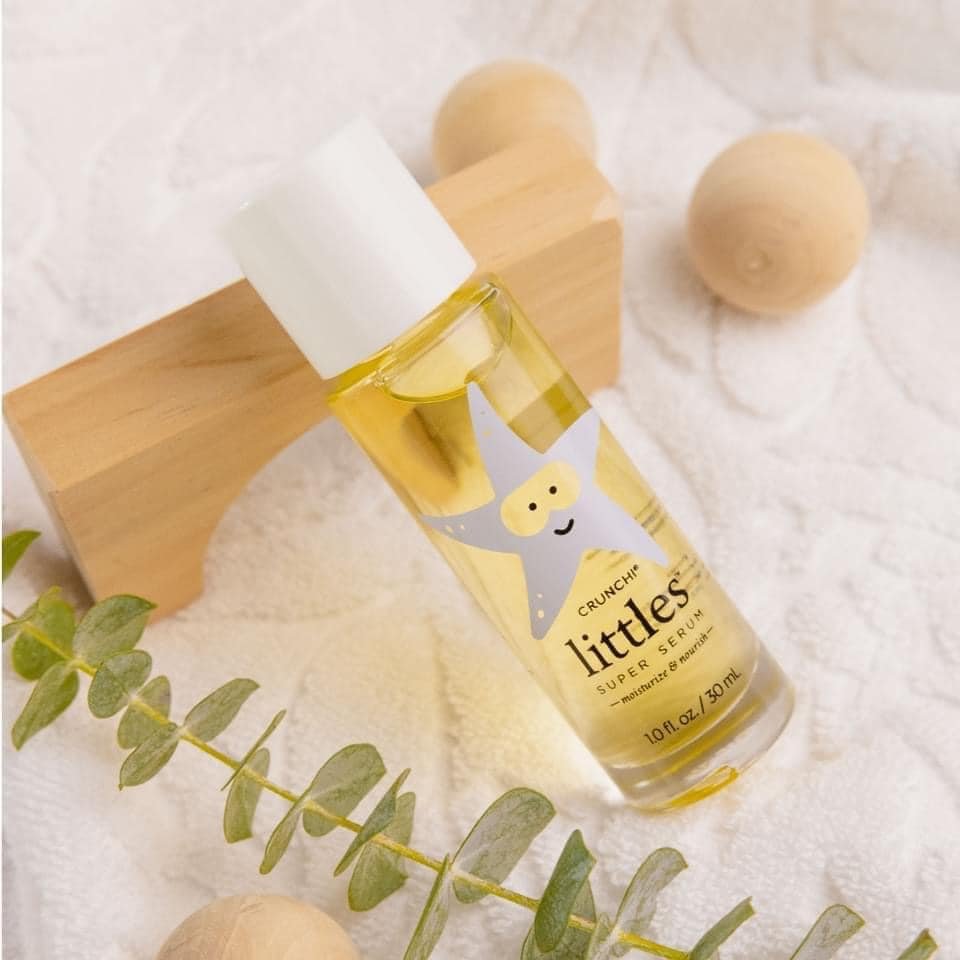
Baby skin is 30% thinner than adult skin. Whatever goes on absorbs faster and more completely. This is the single highest-impact category to clean up.
For more on clean baby skincare ingredients, OrganicSkinClub.com breaks down the science in a way that’s actually readable.
Feeding: Bottles, Sippy Cups, Plates
Your safest options are glass bottles with silicone sleeves, stainless steel, or food-grade silicone. Never microwave plastic containers, even “microwave safe” ones.
Sleep: Crib Mattress, Sheets, Sleepwear
Babies spend 14 to 17 hours a day sleeping. A Greenguard Gold certified mattress means it’s been tested for chemical emissions. Organic cotton sheets (GOTS certified) ensure the fabric hasn’t been treated with formaldehyde-based finishes.
Cleaning: Laundry Detergent, Surface Cleaners, Wipes
Many mainstream “baby” detergents still contain optical brighteners and synthetic fragrance. Truly cleaner detergents are fragrance-free, plant-based, and free of dyes.
Start with whatever category your baby has the most contact with. For most families, that’s skincare or sleep. You don’t have to do all four at once.
Certifications You Can Actually Trust
GOTS (Global Organic Textile Standard): The highest standard for organic textiles. Look for this on clothing, sheets, blankets, and swaddles.
Greenguard Gold: Certifies low chemical emissions. Most relevant for crib mattresses and nursery furniture.
EWG Verified: Means a product meets strict health standards and discloses all ingredients. Most useful for skincare and cleaning products.
MADE SAFE: Screens products against a database of known toxic substances. One of the most comprehensive screening processes available.
One certification on a product tells you more than 10 marketing claims on the label. When in doubt, look for the seal.
Budget-Friendly Tips
- Swap the highest-exposure items first. Lotion and crib sheets matter more than a non-toxic toy that gets chewed occasionally.
- Buy in bulk. Wipes, detergent, and diaper cream are cheaper per unit in larger sizes.
- Use fewer products. One good baby wash handles shampoo, body wash, and bubble bath.
- DIY the easy stuff. Nursery surface cleaner: one part white vinegar, one part water, a few drops of lemon juice.
- Use the EWG database before you buy. It’s free. Plenty of affordable drugstore products score well.
The goal isn’t a perfectly non-toxic nursery. It’s making the next purchase a little more informed than the last one. That’s enough.
Your Free Starter Guide
We created the Toxin-Free Mama Starter Guide with a printable checklist of the safest swaps by category, a label-reading cheat sheet, and a list of trusted brands at every price point. It’s free.
Grab the free Toxin-Free Mama Starter Guide here.
The Simplified Version
Read the back of the label, not the front. Start with what touches your baby’s skin the longest. Look for one of the four certifications (GOTS, Greenguard Gold, EWG Verified, MADE SAFE). Swap one product at a time.
That’s the whole thing. Your baby doesn’t need a perfectly curated, Instagram-worthy collection of certified organic everything. They need a parent who’s paying a little more attention than they were yesterday.
You’re already doing that. The next time you pick up a bottle of baby wash, you’ll flip it over and actually know what you’re reading.
That’s not a small thing. That’s everything.
Download the free Toxin-Free Mama Starter Guide and take the guesswork out of your next shopping trip.